=



BIO-Press
LINDSEY BOULLT
LINDSEY BOULLT
“Zeppli-Vishnu”
When Dream Theater’s Derek Sherinian dubs Lindsey Boullt “Zeppli-Vishnu”—a high-velocity collision of Led Zeppelin’s power with Mahavishnu Orchestra’s complexity — the name carries weight. When the album that earned it was built entirely outside the industry — no label, no institutional path, no inherited network — the weight doubles.
When Boullt released Composition in 2007 with Mahavishnu violinist Jerry Goodman, Derek Sherinian, and drummer Atma Anur, critics heard it immediately. His evolution defied traditional apprenticeship — the late start forced a predatory approach, conservatory precision merged with the shrewd grit of the club circuit. This balance built a career the industry didn’t see coming.
Architect of Defiance
Architect of Defiance isn’t a title. It’s what he did. He architected a way to keep going when the system tried to stop him. The artist can survive.
Lindsey Boullt understood that no invitation was ever coming. The established path—formal training, institutional endorsement, curated festival stages—wasn’t his to inherit. Rather than wait for a seat at someone else’s table, he built his own world. Beginning late, operating independently, assimilating into a cohesive vision. Driven by the one thing hardship provides—the unshakeable belief that there is a way through.
For someone already hardened by violence and hardship, taking up the guitar left-handed in an era when right-handed instruments were the only practical option was simply another burden to overcome—a constraint that forged his unconventional fingering patterns, wider intervallic movement, and flat out fretboard speed. The limitation became the weapon.
What followed wasn’t luck or timing — it was the result of a deliberately constructed path, built through years of independent output, relentless performance, and a self-sustaining infrastructure that existed long before the industry took notice.
By the time Composition began attracting serious industry attention—including engagement with Eddie Coralnick (former manager of Allan Holdsworth) and vetting from Brian Rohan, longtime attorney for Grateful Dead and Santana, the system was already in place. The attention arrived because of it.
The system that built this career is detailed here: [link]
Proving Ground
At 21, Boullt enrolled at the University of Texas at Arlington, completing a Music Performance and Theatre Management degree on scholarship in 3.5 years, then graduated with Honors from Musicians Institute in Los Angeles. Six years from zero to professional credentials.
Following LA, Boullt entered NYC at its most dangerous. In 1988, New York City recorded 2,244 murders—the crack epidemic’s peak. Brooklyn, Queens, the Lower East Side hardcore circuit. Prong, Helmet—pummeling audiences. There was zero tolerance for b.s. artistic commitment. The city forced a brutal pragmatism on you. Boullt cut his teeth in these clubs.
Houston expanded his commercial range through rap sessions for Profile Records/Bitch&FatalT—among the first wave of heavy metal guitar in rap—in Houston’s 3rd Ward. Pivoting to house band duties for television series Rock & Roll Sports and opening for a Billboard Top 10 act promoted by MTV, his band Human Zoo quickly rose to open for Metal Blade and Virgin Records touring acts. Production experience with Upstage, Inc., supporting international tours for the Rolling Stones, U2, and Genesis taught the mechanics of large-scale live production—a foundation for the 1994 founding of Musicians Showcase, which would anchor San Francisco’s fusion scene for 25 years.
The Recording: Composition
Composition positioned Boullt in direct dialogue with fusion royalty. Featuring Mahavishnu Orchestra violinist Jerry Goodman, Dream Theater keyboardist Derek Sherinian, and virtuoso drummer Atma Anur, the album demonstrated compositional authority at the highest level. Validated not only by high-profile collaborations, but by its critical reception, earning a 93/100 from Jazz.com and placement on numerous countries’ ‘Best of 2007’ lists. Historian Walter Kolosky declared: ‘if any music is a product of the Mahavishnu legacy…this is it! (with Zeppelin and Shakti thrown in) Very enjoyable and well done.’
Independent of major-label backing, Boullt secured distribution contracts in Japan, Germany, and the USA. By 2011, the album became a global underground phenomenon, achieving viral status with over 1 million downloads across international peer-to-peer networks before the streaming era took hold. With 40+ international magazine reviews, the album also generated a film commission from PointMadeProductions|NYC—their film Adopted a Tribeca Film Festival finalist in 2007—and connected Lindsey with elite collaborators including Marco Minnemann, Kai Eckhardt, and Tony Franklin—relationships that proved foundational to two decades of work in San Francisco’s fusion community.
Industry Validation and Global Recognition
Allan Holdsworth feature: Guitar Player Magazine (GP June 2004) commissioned Boullt to author the definitive ‘How to Play Like Allan Holdsworth’ analysis. The significance of this work was later immortalized in The Guitar Player Book (2007)—the magazine’s 40-year retrospective—anchoring Boullt’s contribution as a permanent part of the global guitar canon.
Billboard Era: From 2008-2012, Billboard.com maintained dedicated artist and album presence for Boullt and Composition—and placement alongside Led Zeppelin and Mahavishnu Orchestra in genre association.
Major Artist Consideration (2010): Eddie Coralnick (Allan Holdsworth’s former manager) facilitated a feature on nationally syndicated The Fusion Show (WCSB/Cleveland). In 2010, Brian Rohan (music attorney for Grateful Dead, Janis Joplin, Santana, Aerosmith) conducted an hour-long interview with Boullt for a major touring role—an opportunity that underscored the reach of the project. This appearance offered a raw, unfiltered look into Boullt’s independent journey: his late start at age 21, underground metal-fusion roots, the making of Composition (including the profound personal challenge of his spouse’s brain surgery mid-recording), and the serendipitous studio moments that defined the album.
Read the full interview transcript and archival notes here
The Gibson Contract (2013): Boullt secured a full artist contract with Gibson. Executive Todd Money told Lindsey it was ‘the fastest agreement Gibson has ever done.’ The signing was backed by a promotional campaign shot by legendary photographer Pat Johnson (Bowie, Tupac). Gibson has sponsored multiple events including reality television pilot featuring Boullt as host alongside bass luminary Kai Eckhardt.
In 2017, Boullt was selected as a San Francisco IfOnly Luminary — a curated platform pairing world icons with audiences, whose roster included Kobe Bryant, Madonna, and Michael Chiarello.
Global Recognition (2020): Ranked #29 Best Fusion Guitarist in the World by Everyday Fusion (Note.com, Japan)—arguably the most discerning guitar market globally. The distinction emphasized his elite compositional skill—a recognition arriving more than a decade after Composition entered the repertoire, representing a rare second cycle of critical acclaim. This placement identifies Boullt’s work as a structural bridge between fusion’s foundational era and its contemporary iteration.
San Francisco: The Model
Debt-ridden after a divorce, with no network and rent in the world’s most expensive city during the dot-com boom, Boullt engineered a 25-year infrastructure ecosystem. Musicians Showcase, ChaoticArtCircus, civic events, production, performance, and teaching pipelines to Berklee and NYU positioned him not only as a player in the fusion scene, but as a nexus.
Musicians Showcase featured luminaries like Stu Hamm, Greg Howe, Atma Anur, and Kai Eckhardt—curated programming that evolved into a central platform for talent and a cultural anchor during the dot-com era, drawing sustained coverage from SF Chronicle, SF Weekly and the Bay Guardian. Boullt co-organized major city events including Jerry Garcia Day (2015) and Rock in the Park (2016) while simultaneously maintaining an intensive schedule of live performances throughout the Bay Area.
ChaoticArtCircus (1999–2001) fused music, technology, and audience interactivity—sound, visual art, avant-garde dance, sensor-triggered movement, robotic installations, cosplay, large-scale projection operating in tandem. Its engine was compositional force: rigorously constructed pieces designed to generate impact. Many pieces later appeared on Composition. Employing up to 100 performers, admin, and vendors across SF 2000, MetalFest/Los Angeles 2000, and SF 2001.
September 11, 2001 ended ChaoticArtCircus in a single moment. Dot-com funding evaporated. The city emptied. Within days, Boullt relaunched—the same network and players — producing over 40 showcases at Red Devil Lounge into the following summer. The collapse revealed the structure’s power.
Taken together, Musicians Showcase, ChaoticArtCircus, and the post–9/11 relaunch formed a mini arts ecosystem, creating work for musicians, artists, and vendors, incubating new compositions, and anchoring a local community around ambitious, long-form productions.
The Elite Music School Pipeline
Boullt’s methodology was synthesized during three years on faculty at Musicians Institute (2005–2008), where he developed a systematized approach that produced repeatable results. Building an ‘elite placement’ pipeline, his RockSchool alumni have moved on to Berklee, Musicians Institute, the University of North Texas, and NYU’s Clive Davis Institute, giving his studio an unusually high success rate at launching serious professional careers.
Beth Marlis, Vice President of Musicians Institute: ‘Lindsey is a spectacularly creative and wildly talented musician…His dedication to his art is matched by his mentorship, inspiration and profound support for emerging young artists.’
Technology, Innovation, and Community
While most fusion guitarists competed on technique alone, Boullt expanded the battlefield. Years before real-time audience interaction became commonplace, he integrated art-forms into live performance—projects like ChaoticArtCircus, JamWow Fusion Festival (2009), and FlashBangBoom (2012). This technological edge attracted revenue streams competitors couldn’t access: corporate benefit concerts, academic residencies, high-profile civic events.
His commitment to community is reflected in performances at Facebook HQ/Menlo Park supporting Syrian Humanitarian Aid, at the Lesher Center for the Arts with Kai Eckhardt, Sean Rickman, and Osam Ezzeldin, and a prestigious five-year consecutive residency as featured performer for Stanford University School of Education Commencement ceremonies (2007-2011).
Cadenza
Lindsey Boullt’s trajectory defies conventional wisdom—though conventional paths were never an option. Raised in adversity and violence, he learned early that creative freedom and financial autonomy weren’t ambitions. They were escape routes.
Today, he teaches and performs in San Francisco, with property in Sonoma County—a life designed when his back was against the wall and now lived on his own terms.
Twenty-five years later, the record is clear: Musicians Showcase. The Gibson contract. A global catalog. Students placed in elite music schools. Expansive community. The architecture held.
In March 2026, Boullt published Grit. Discipline. Guts: The Blueprint for the Modern Music Career a 25-year blueprint drawn from this infrastructure, published 03/18/26 at AllAboutJazz.

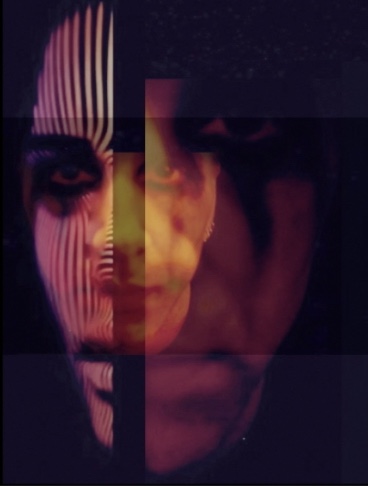
Composition: Page Revisited (feat. DerekSherinian|AtmaAnur|JonHerrera)
Composition: Aurora’s Aura (feat. JerryGoodman|DerekSherinian|AtmaAnur|JonHerrera)
dbl MEtL RESIST – LBoullt-compsr|Marco Minnemann|TonyFranklin|DerekSherinian (groove metal fusion)